
I couldn’t help but contemplate the abstract expressionist and minimalist work. As an art history major I enjoy them in a way that the artists intended for me to do so. After all, Abstract Expressionist artists want you to contemplate the sublime they painted, such as Mark Rothko.
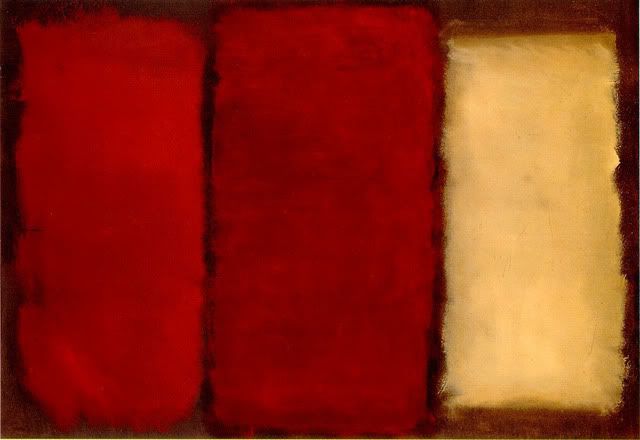
Image via Photobucket and blood_head
Minimalist artists want you to appreciate the simple forms they have created, such as Donald Judd.

Image via photobucket and spacedogs
The same goes for the Constructivist and Suprematist artists with their pure forms.
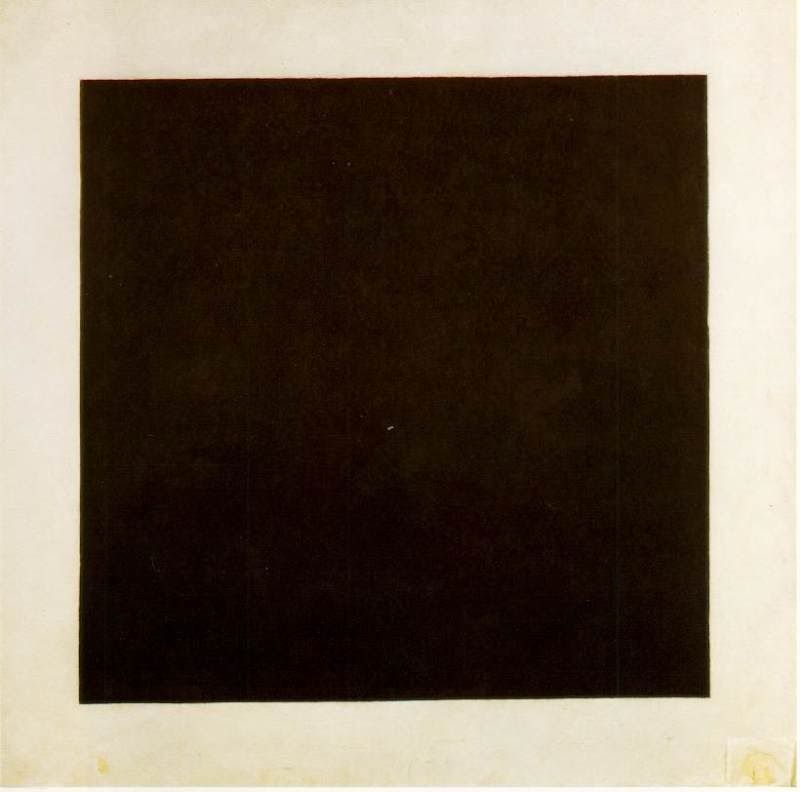
Kasimir Malevich’s Black Square, from 1929
Image via Photobucket and soggywaffles
However, do people who do not know the intentions behind the artist’s work actually appreciate artwork from these genres? Furthermore, when people learn about the reasons behind these works, do they rethink their original opinions and respect and like the work? Or will they still not like and respect the work because of the fact that they had to learn some (for lack of a better word) esoteric thinking to understand them? This does not just apply to artists who rely on only forms and shapes, but artists such as Julia Heffernan. She creates works she calls self-portraits but go against what people think a self-portrait typically looks like.
Regarding this post, I also took partial inspiration from the Daria Made for TV movie, “Is it Fall yet?” You know, the scene where the Ashfield artists discussed the value of Fauvism?
 Art History Ramblings
Hi Catherine. I cant say I know much about this genre, but I think the key to getting beyond the dismissiveness often levelled at the simplistic forms is that this type of art is about an internalisation of the process of viewing it.
One thing that struck me when looking at the old masters in Italy was how the image making was so driven by patronage – so many Botticellis are like a Medici equivalent of a Billboard. Looking at some of this minimalist stuff, that level is entirely stripped away and you are left with how the work is relevant to you and you alone. Personally, I find that very comforting.
Kind Regards
H Niyazi
threepipeproblem.blogspot.com
Thank youi for the response. Yeah, regarding the dismissive aspect, I think Abstract Expressionism, Minimalism, Constructivism, and Suprematism were largely responsible for the reputation contemporary art has. Also, with the “stripping away” aspect, I think when people have to think for themselves instead of being presented with something like a Botticelli, they could get frustrated.
If you like Matisse, please take a minute to look at my blog at: http://segmation.wordpress.com/2011/04/11/introduction-to-fauvism-www-segmation-com/ and thanks for allowing this comment.