From various books in The Chronicles of Narnia, C.S. Lewis employed references to famous buildings and sculptures renowned for their grand, imposing size, presumably to inspire awe in readers.
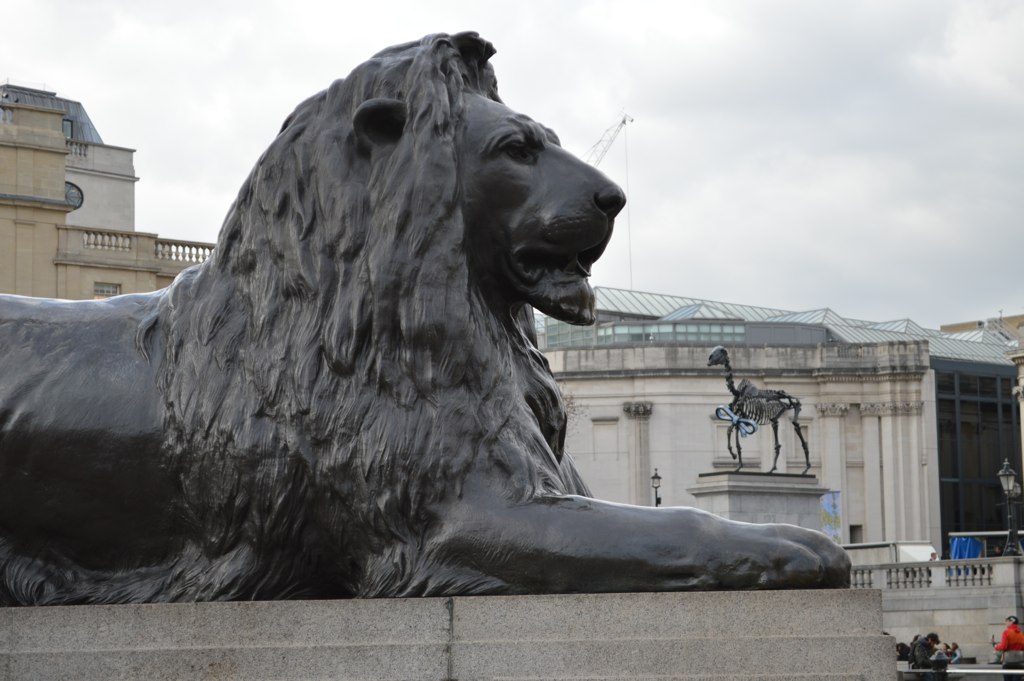
In The Silver Chair, Aslan, the lion god of Narnia, is equated to a sculpture of the lions installed and exhibited in England’s Trafalgar Square. One can look at these big stately cats to help remind readers of how gigantic Aslan is in the books.
The Horse and His Boy continue the theme of awe-inspiring architecture with a journey through Tashbaan (Not the only one who noticed this, but Tashbaan called to mind the Ottoman Empire), a rival to Narnia. The description of Tashbaan’s main palace, particularly the mention of minarets, evoked the Hagia Sophia in Istanbul, Turkey. Lewis mentioned the same type of architecture in The Voyage of the Dawn Treader. The illustration in the edition I read depicting the main Tashbaan palace resembled Breughel’s The Tower of Babel.

Of all the books in the series, the most art-historical references appear in the prequel, The Magician’s Nephew, particularly mentions of buildings and decorations associated with governance and power. Lewis continued that theme started in A Horse and His Boy. As the main characters, Polly and Digory, travel through different dimensions, they visit the birthplace of Jadis, the White Witch, who would later rule Narnia in the first book in the series. The book describes her world, full of ancient pyramidal ruins. There is mention of London’s Saint Paul’s Cathedral, as well as England’s other government and royal buildings, not to mention the fear the characters have of the White Witch setting foot in them.
On a final note, I think Lewis preferred Medieval-period crowns because of a flattering description of some Narnian royal headwear. According to a professor during my college years, he was a Medievalist.
 Art History Ramblings